
Everything you need to know before enrolling — what you’ll learn, how to tell a strong course from a weak one, and how to turn a certificate into a real career.
SEO · SEM · SMM core channels covered
Online & Offline formats compared
Digital Marketing Course Guide As more businesses move online, the demand for digital marketing professionals keeps rising. From startups and e-commerce brands to large enterprises, organizations need people who can attract customers through search engines, social media, email, and online advertising — but with hundreds of courses on offer, picking the right one can feel overwhelming.
This guide walks through what a good course actually teaches, how online and offline formats compare, and exactly what to check before you enroll.

What is a digital marketing course?
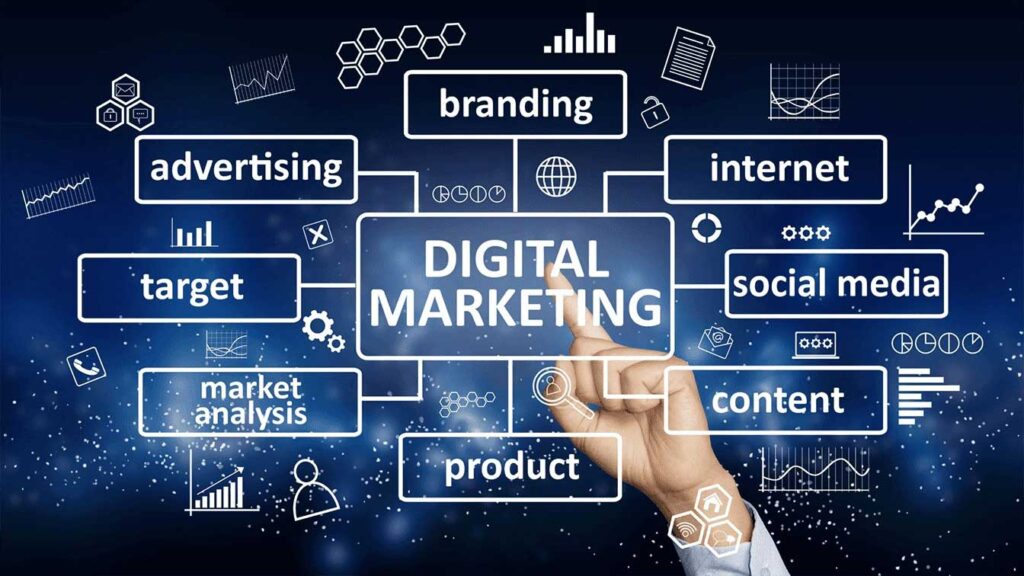
A digital marketing course teaches you how to promote products, services, and brands using digital channels — the internet, rather than newspapers or television. A quality course pairs theory with hands-on practice so you understand how these channels work together in real business situations.
SEO
Getting found in organic search results through keyword research and optimization.
SEM & PPC
Paid placement in search results, priced per click.
Social media
Building audiences and engagement across platforms.
Content
Blogs, video, and other assets that attract and retain customers.
Direct, permission-based communication and lead nurturing.
Analytics
Measuring what’s working and reporting on performance.
Why learn digital marketing?
Almost every industry now needs an online presence, which is what makes this skill set so broadly useful. People enroll to build a career, start freelancing, grow a personal brand, expand a business, or simply stay employable as jobs change.
Unlike many technical careers, digital marketing blends creativity, communication, analysis, and strategy — which is why it suits people from very different educational backgrounds.
A quick primer on what digital marketing covers, in under five minutes.
Skills you’ll build
Technical
- Keyword research and SEO optimization
- Paid advertising fundamentals
- Social media strategy and scheduling
- Website and landing page optimization
- Email campaign creation
- Marketing analytics and reporting
Soft skills
- Communication and creative thinking
- Problem-solving under ambiguity
- Data interpretation
- Project and time management
These transfer well beyond marketing roles — which is part of why the skill set holds its value.

Analytics turns marketing from guesswork into a measurable, improvable process.
Online course vs. offline learning
Many learners wonder whether to choose an online course or classroom training. Neither is universally better — the right pick depends on your schedule, budget, and learning style.
| Feature | Online course | Offline course |
|---|---|---|
| Flexibility | Learn anytime | Fixed schedule |
| Cost | Usually more affordable | Often higher |
| Accessibility | Available from anywhere | Location-dependent |
| Learning pace | Self-paced or live | Instructor-paced |
| Networking | Virtual communities | Face-to-face |
| Practical projects | Available in many programs | Usually included |
If you’re balancing college, work, or family responsibilities, an online course often offers more room to fit learning around your life.
What a good course should include
Not every course covers the same ground. Before enrolling, check the curriculum against these fundamentals:
- 01SEO — how websites earn visibility through content and keyword optimization.
- 02Social media marketing — how businesses build and engage audiences on each platform.
- 03Content marketing — how blogs and video attract and retain customers.
- 04Email marketing — nurturing long-term customer relationships directly.
- 05Analytics — measuring campaign performance with real tools.
- 06Practical projects — hands-on assignments, not just theory.
Digital marketing changes frequently — a current syllabus is worth more than a polished but outdated one.
How to choose the best course
Weigh these six factors before you commit your time and money:
- Updated curriculum — current syllabus over outdated material.
- Practical learning — case studies, assignments, real projects.
- Experienced trainers — practical industry insight, not theory alone.
- Certification — a recognized credential that strengthens a resume alongside real skills.
- Career support — resume guidance, interview prep, or placement help.
- Student reviews — genuine feedback on strengths and weaknesses.

Career support and practical review sessions separate a strong program from a certificate mill.
Is a certification worth it?
A certification can demonstrate commitment to learning, but it doesn’t guarantee employment on its own. Employers usually value practical experience, portfolio projects, problem-solving ability, communication, and continuous learning more than the certificate itself.
Think of certification as proof you’ve completed structured learning — not as the only indicator of expertise. The best certification is one that supports strong practical knowledge, rather than replacing it.
Who should take a digital marketing course?
This field suits a wide range of learners — college students, recent graduates, business owners, freelancers, working professionals, content creators, career changers, and anyone eyeing remote work. No advanced programming knowledge is required for most beginner courses; basic computer and internet skills are usually enough to get started.
Common mistakes to avoid
- Choosing the cheapest course without checking quality
- Ignoring practical assignments
- Expecting instant results
- Skipping SEO fundamentals
- Not building a portfolio
- Stopping learning after certification
Key takeaways
Before you enroll
- Digital marketing is one of today’s most versatile career skills.
- A quality course combines theory with practical experience.
- Online courses offer flexibility for students and working professionals alike.
- Focus on real skills, not just collecting certificates.
- Certification supports a resume — it should never replace practical work.
- Continuous practice is what separates long-term growth from a one-time course.
Frequently asked questions
How long does a digital marketing course usually take?
Duration varies widely. Beginner programs can take just a few weeks, while more comprehensive programs may run several months, depending on curriculum depth and schedule.
Is an online digital marketing course effective?
Yes — especially when it includes practical assignments, projects, and real opportunities to apply what you learn, rather than video lectures alone.
Do I need coding skills to learn digital marketing?
No. Most beginner courses require no coding knowledge at all; basic computer literacy is usually sufficient.
What is the best digital marketing certification?
It depends on your goals, but look for certifications built around hands-on learning, current practices, and industry recognition rather than theory alone.
How do I choose the best course for me?
Compare curriculum currency, instructor experience, practical projects, certification value, learner reviews, and career support before enrolling.
Start with a solid foundation
A digital marketing course can open doors to career opportunities, freelance work, entrepreneurship, and business growth — but the payoff depends on choosing a program that teaches practical, current skills rather than theory and certificates alone.
As you evaluate options, weigh the curriculum, format, instructor expertise, and hands-on opportunities. Whether you choose an online course or classroom learning, your results will come down to how consistently you practice and apply what you learn.