
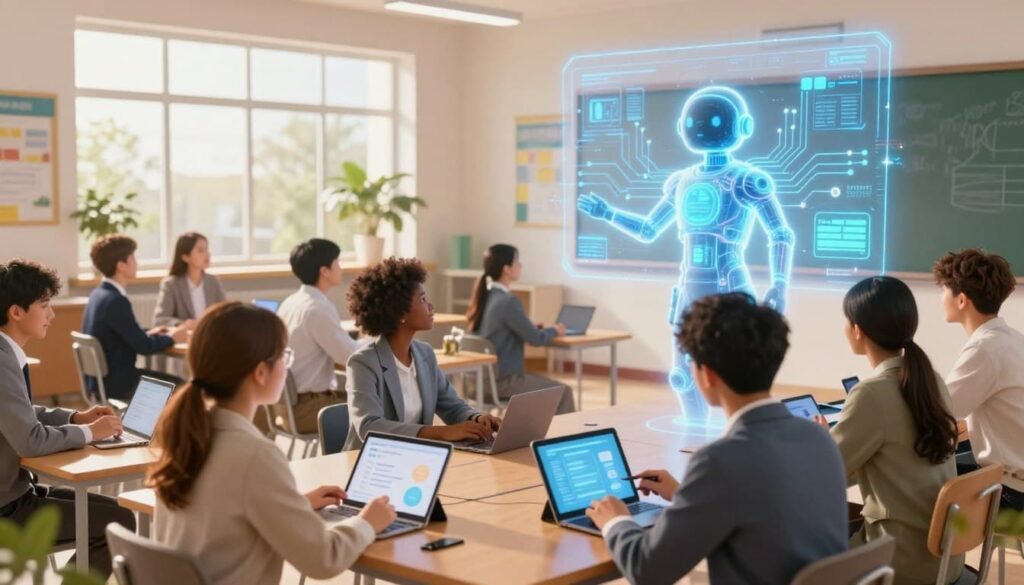
We live in a time where technology changes our learning every day. Did you know that Ai in education Enhance our learning Experience. This shows how we are changing how we learn.
By enhancing education with artificial intelligence, we make systems that fit each person’s learning pace. These tools let us interact with complex content in ways we couldn’t before. We’re moving towards learning environments that are more responsive and effective for students everywhere.
Using these advanced systems helps us fill gaps in traditional classrooms. We think that ai in education is a powerful tool for growth. As we adopt these digital changes, we open up opportunities for every learner to thrive in today’s world
Key Takeaways
- Modern technology is fundamentally changing how we process and retain new information.
- Adaptive systems allow for personalized learning paths tailored to individual student needs.
- Responsive environments foster better engagement and higher academic success rates.
- Advanced digital tools bridge the gap between complex concepts and student understanding.
- We are entering a new era of academic growth driven by smart, automated systems.
The Evolution of Digital Transformation in Education
Ai in Education We’re seeing a big change in how we learn in schools. The digital transformation in education has moved us from old, static teaching methods to new, interactive ones. This change helps students get ready for our complex, connected world.
From Traditional Classrooms to Digital Ecosystems
For a long time, schools used old textbooks and strict schedules. Now, we’re moving to digital systems that offer unprecedented flexibility. These systems let students get top-notch resources from anywhere, breaking down old barriers to learning.
By using advanced educational technology, schools can give a better learning experience. These systems connect teachers, students, and parents in real-time. This creates a teamwork atmosphere that was hard to achieve before. It’s a big change in what we call a classroom.
The Shift Toward Student-Centered Learning Models
We’re moving away from the old “one-size-fits-all” teaching method. Now, we know every learner is different and needs a special approach. Modern educational technology lets teachers make learning plans that fit each student’s pace.
Ai in Education change keeps students interested by focusing on their own learning goals. It makes learning more inclusive and effective. This progress is key for preparing the next generation to succeed in our fast-changing world.
Understanding the Role of Ai in Education
It’s key for teachers to grasp digital innovation in today’s classrooms. Ai in education is a key part of modern teaching. It helps us create learning spaces that meet each student’s needs.
Defining Artificial Intelligence Technology in Schools
Artificial intelligence technology means computer systems that can think like humans. In schools, it’s about software that learns and adapts. This lets teachers focus on mentoring and interacting with students.
These tools don’t replace teachers. They help us teach better. By using them, our classrooms stay up-to-date in a digital world.
How Machine Learning Models Process Educational Data
Machine learning models learn from lots of educational data. They look for patterns in how students behave. We give them data like test scores and how students use digital tools.
This helps us understand each student’s learning style. We can then adjust our teaching to fit their needs. Below, we compare this to old ways of tracking data.
| Feature | Traditional Methods | AI-Driven Models |
|---|---|---|
| Data Processing | Manual and slow | Automated and real-time |
| Pattern Recognition | Limited to surface trends | Deep behavioral analysis |
| Outcome Focus | Historical reporting | Predictive forecasting |
Predictive Analytics in Student Performance
Predictive analytics are a big step in helping students grow. With artificial intelligence technology, we can spot problems before they hurt a student’s grades. These systems alert us to signs like a drop in assignments or quiz scores.
By catching these issues early, we can help students catch up. This makes learning more inclusive. The aim of ai in education is to give each student what they need to succeed.
Personalized Learning Paths Through Adaptive Algorithms
Personalized learning with ai is changing how we help students grow. We’re moving away from fixed curricula to fit each student’s needs. This way, no one is left behind or held back.
Customizing Content Delivery for Individual Pacing
Students learn at different speeds. Our digital tools use adaptive algorithms to adjust content for each one. This tailored approach lets fast learners advance and gives extra help to those who need it.
Here’s how these systems differ from old classroom methods:
| Feature | Traditional Model | Adaptive AI Model |
|---|---|---|
| Pacing | Fixed for all | Individualized |
| Content | Static textbooks | Dynamic modules |
| Feedback | Delayed | Instant |
Dynamic Adjustments Based on Mastery Levels
True education goes beyond memorization. Our systems focus on deep understanding. Students must show they get it before moving on. If they struggle, they get extra help.
The Impact of Real-Time Content Modification
Changing content on the fly keeps students engaged. If a student looks frustrated, the system switches to something new. This immediate responsiveness keeps learning exciting.
Personalized learning with ai encourages curiosity. Students feel more confident with content tailored to their level. This technology helps create a more inclusive and effective education for all.
Enhancing Accessibility for Diverse Learners
Technology is changing how we help students with different needs. By using personalized learning with ai, we make sure every student can succeed. This is true for students with physical or cognitive challenges.
Ai Tools for Students with Disabilities
Assistive technology has grown a lot. It now includes advanced systems that meet each student’s needs. These tools offer essential support for students facing barriers in school.
Speech-to-Text and Text-to-Speech Innovations
Speech-to-text software helps students with motor or writing issues. It lets them share their thoughts clearly. Text-to-speech tools help those with visual or reading challenges by turning text into speech.
These tools let students work at their own speed. They help create a inclusive education where every student can contribute.
Breaking Language Barriers in Global Classrooms
Our classrooms are getting more diverse. AI translation services help students who speak different languages. They can join in discussions, even if they’re not fluent in the main language.
This technology makes sure everyone has equal access to learning worldwide. With personalized learning with ai, teachers can use resources in students’ native languages. This helps students learn new languages too.
| Assistive Feature | Primary Benefit | Target User Group |
|---|---|---|
| Speech-to-Text | Reduces writing fatigue | Motor-impaired students |
| Text-to-Speech | Improves reading fluency | Visual/Learning disabilities |
| Real-time Translation | Removes language barriers | English language learners |
The aim of personalized learning with ai is to help students grow. We keep improving these tools. Our goal is to give every learner the chance to succeed.
Automating Administrative Tasks for Educators
Technology is changing how we handle school work. It’s now taking over the tasks that used to fill teachers’ days. This means our teachers can spend more time with students and helping them grow.
Streamlining Grading and Assessment Processes
Grading is a big job for teachers. It takes a lot of time and can make them tired. But, new intelligent systems are making it easier. They can check assignments and even give early feedback on writing.
These tools help students get feedback faster and more often. This is key for their learning. Teachers can then focus on the harder parts of grading that need a personal touch. This makes learning better for everyone.
Reducing Burnout Through Intelligent Scheduling
Teacher burnout is a big problem. But, smart scheduling tools are helping. They make sure teachers have the right amount of work and help manage resources well.
Using ai in education for these tasks makes teaching better. It keeps teachers happy and in the classroom where they’re needed most. Here’s how things change with automation.
| Task Category | Manual Approach | Automated Workflow | Primary Benefit |
|---|---|---|---|
| Grading | Manual entry | Instant analysis | Time savings |
| Scheduling | Spreadsheet tracking | Dynamic optimization | Reduced stress |
| Data Entry | Paper-based logs | Cloud synchronization | Increased accuracy |
| Feedback | Delayed response | Real-time delivery | Improved learning |
Intelligent Tutoring Systems and Real-Time Feedback
Digital transformation in education has brought us advanced tools that act as personal mentors. These systems help fill the gap between classroom learning and studying alone. They offer support when students need it most.
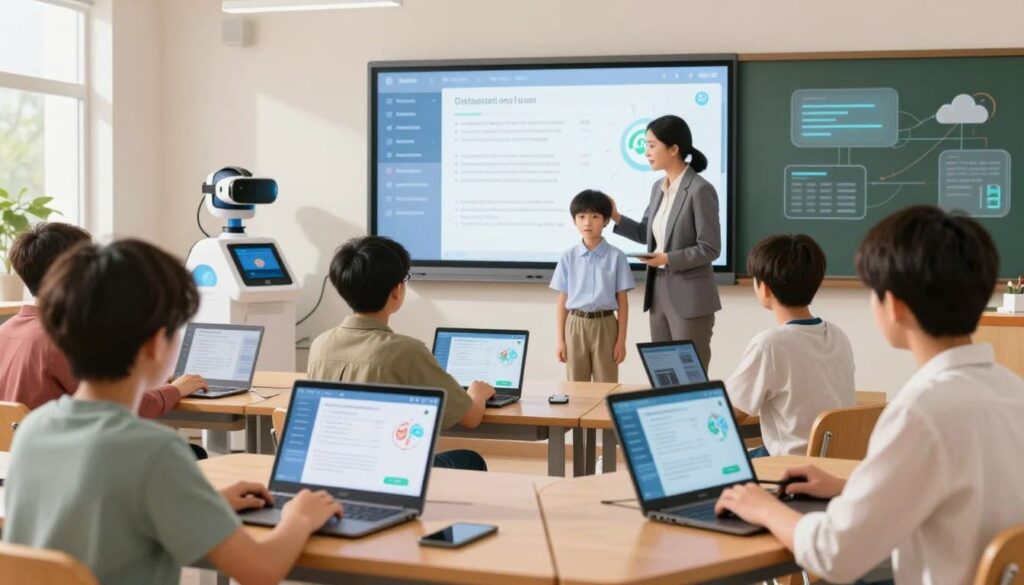
The Rise of Virtual Tutors Like Khanmigo
Virtual tutors have become key helpers for students tackling tough subjects. Platforms like Khanmigo use smart language models to help students solve problems, not just give answers.
This interactive approach keeps students interested in the material. It’s like a Socratic dialogue, promoting critical thinking and a deeper understanding.
Providing Immediate Corrections to Prevent Misconceptions
One big challenge in learning is fixing wrong information early on. When students study alone, they might keep making the same mistakes.
Intelligent systems offer real-time feedback, helping learners fix their mistakes right away. This quick help stops misconceptions from becoming deep-seated and keeps learning on track.
“The most effective way to learn is to engage with the material, make mistakes, and receive immediate, constructive guidance to refine your understanding.”
Ai in Education
We live in a time where technology changes our learning every day. Did you know that Ai in education Enhance our learning Experience. This shows how we are changing how we learn.
The Psychological Benefits of Instant Support
Getting help from a machine can feel less scary than asking a teacher again and again. This non-judgmental environment lets students try and fail without fear, boosting their confidence.
When students feel supported, they’re more likely to keep going, even when things get tough. Here’s how these systems compare to traditional study methods:
| Feature | Traditional Study | AI Tutoring |
|---|---|---|
| Availability | Limited to school hours | 24/7 Access |
| Feedback Speed | Delayed (days) | Instant |
| Judgment | Social pressure | Neutral/Objective |
These tools give students the power to control their learning journey. We’re seeing a shift towards more personalized and resilient learning experiences worldwide.
Leveraging Ai-Powered Learning Tools for Skill Development
We’re seeing a big change in how students learn new skills. Ai-powered learning tools are being used in schools. They make learning more active and tailored to each student’s needs.
Gamification and Interactive Simulations
Learning becomes clearer when students get to interact with it. Gamification turns hard lessons into engaging challenges that reward effort and curiosity. These simulations let students try things out safely, without fear of failure.
Ai-powered learning tools help manage these simulations. They give feedback in real time, keeping students motivated. This hands-on learning bridges the gap between theory and practice, making the classroom a place of discovery.
Collaborative Platforms for Remote Learning
Keeping students engaged when they’re not in the same room is key. We use collaborative platforms to keep everyone connected and projects moving. These digital spaces are where students share ideas and solve problems together in real time.
Using ai-powered learning tools in these platforms makes sure no student feels left out. Smart features help organize tasks and suggest resources based on the team’s progress. This builds a sense of community, essential for remote learning.
Enhancing Critical Thinking Through Ai Prompts
The quality of a student’s work depends on their curiosity. Well-designed prompts encourage students to look at information from different angles. This makes them think critically about their answers.
By asking targeted questions, we help students develop problem-solving skills. These ai-powered learning tools guide them to explore topics deeply. This builds resilience and analytical skills for the future.
| Feature | Traditional Learning | AI-Enhanced Learning |
|---|---|---|
| Engagement | Passive listening | Active participation |
| Feedback | Delayed grading | Instant analysis |
| Pacing | Fixed for everyone | Personalized speed |
| Collaboration | Limited to classroom | Global connectivity |
Data-Driven Insights for Curriculum Improvement
Modern educational technology helps us turn data into useful insights for each student. It goes beyond old ways of testing to show how students interact with tough subjects. This change lets us make better choices to improve teaching.
Identifying Knowledge Gaps at Scale
Finding out where students start to struggle can be hard. Thanks to data analytics, we can spot knowledge gaps across whole grade levels quickly. This helps make sure no student is left behind because of unseen curriculum challenges.
“Without data, you are just another person with an opinion.”
W. Edwards Deming
Looking at lots of data shows us patterns we couldn’t see before. This lets us help students who are struggling early on. It’s a new way to help students catch up, making learning more effective.
Using Analytics to Refine Teaching Strategies
Using real data is key in modern educational technology. Teachers can now adjust their teaching based on how students do on certain tasks. This makes classrooms more responsive and effective.
The table below shows how using data changes teaching compared to old ways:
| Metric | Traditional Approach | Data-Driven Approach |
|---|---|---|
| Curriculum Pacing | Fixed Schedule | Dynamic Adjustment |
| Feedback Loop | Delayed/Weekly | Immediate/Real-time |
| Instructional Focus | One-size-fits-all | Personalized Mastery |
Using these analytical tools, we keep making our teaching better to meet student needs. This cycle of checking and improving keeps our curriculum fresh and effective. We’re creating a system where every teaching choice is based on clear, measurable success.
Addressing Ethical Considerations and Data Privacy
Digital tools in schools are growing fast, bringing big responsibilities for privacy and ethics. As we move to cloud-based systems, we must make sure ai in education is safe and open for all students.

Protecting Student Information in the Cloud
Cloud-based education is flexible but also risky. We need robust security protocols to keep student records safe. Encryption and multi-factor authentication are key to protecting data.
Schools should choose vendors that follow strict privacy rules like FERPA and COPPA. By checking our digital partners, we make sure ai in education platforms handle student data carefully. We also keep an eye on cloud environments to catch threats early.
Mitigating Algorithmic Bias in Educational Software
Technology’s fairness depends on the data it’s trained on. We must find and fix biases in our software to avoid unfair results. If an algorithm favors some over others, it goes against equitable learning.
Developers and teachers need to work together to make sure training data is diverse. By asking for clear explanations of how ai in education tools work, we can ensure fairness. This way, every student gets the help they need to do well.
| Focus Area | Primary Goal | Action Required |
|---|---|---|
| Data Privacy | Protecting Identity | Implement End-to-End Encryption |
| Algorithmic Fairness | Reducing Bias | Audit Training Datasets Regularly |
| System Transparency | Building Trust | Publish Clear Ethical Guidelines |
Bridging the Global Educational Divide
We think that where you live shouldn’t affect how well you learn. In today’s world, not everyone has the same learning tools. ai-powered learning tools can help make education fair for all.
“Education is the most powerful weapon which you can use to change the world.”
Nelson Mandela
Providing Quality Resources to Underserved Regions
Students in poor or far-off places often miss out on good books and teachers. Digital tools now bring top-notch learning to these areas. Scalability means one tool can help millions at once.
By using these tools, kids in small towns get the same basics as city kids. This sharing of knowledge is key for the world’s progress. Consistent access to high-quality content lets students dream big, no matter their background.
Low-Bandwidth AI Solutions for Remote Access
Old tech can hold back progress in poor areas. So, new, ai-powered learning tools work well even with slow internet. They use simple text and small files to keep learning going.
These tools are made to work offline or use little data. This means students can learn even when the internet is out. Our aim is to give every learner the chance to succeed, no matter where they are.
Preparing Students for an Ai-Driven Workforce
We need to change how we teach to get ready for a world where machines do a lot of work. Artificial intelligence technology is real now, not just something for the future. By changing how we teach, we help students keep up in a fast-changing world.
Integrating Ai Literacy into Modern Curricula
Students need more than basic computer skills to succeed. We must teach AI literacy in school. This means learning how AI works and how to use it wisely.
Students should get hands-on with AI tools early. This builds their confidence and prepares them for new digital challenges. It connects school learning to real-world jobs.
Developing Human-Centric Skills in the Age of Automation
While knowing how to use AI is important, we also need to focus on human skills. Machines can’t replace empathy, creativity, or complex thinking. These skills are more valuable as simple tasks are automated.
Teachers should make learning about critical thinking and teamwork a priority. By teaching both tech skills and soft skills, we prepare students for jobs that need a human touch. Here’s what students need for success in the future.
| Skill Category | Focus Area | Workplace Value |
|---|---|---|
| Technical | Data Analysis | High Efficiency |
| Human-Centric | Creative Problem Solving | Innovation |
| Human-Centric | Ethical Judgment | Trust and Integrity |
| Technical | AI Literacy | Adaptability |
Our goal is to create a workforce that can handle the challenges of artificial intelligence technology. By teaching both tech and human skills, we help students lead the future, not just follow it.
Conclusion
We are at a critical point where technology changes how we learn. By focusing on using artificial intelligence to improve education, we open doors for many students. This was not possible before.
Now, we have tools that adapt to each student’s needs. This means classrooms can be more fair and accurate. But, we must always keep ethics in mind as we move forward.
Our goal is to make sure every student gets the skills they need for the future. We encourage you to check out these digital tools to help your learning. Let’s keep pushing for education that empowers teachers and excites students worldwide.
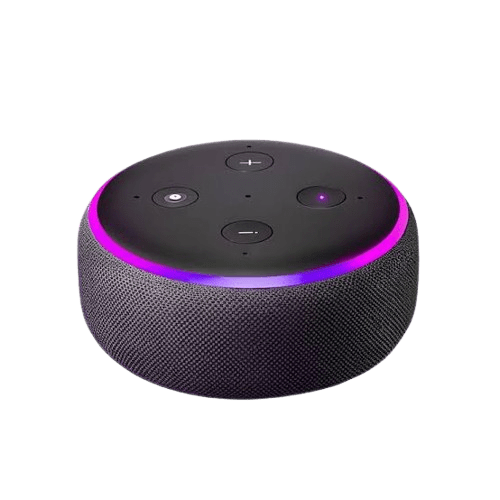
Echo Dot
play your favorite song, read the latest headlines, dim the lights in your living room, and more.
FAQ
How is artificial intelligence technology currently reshaping our learning experiences?
Artificial intelligence is changing how we learn. It makes learning more interactive and tailored to each student. This makes learning more fun and effective.
What does digital transformation in education look like in a modern classroom?
Digital transformation means moving from old teaching methods to new digital ones. It focuses on each student’s needs, using technology to help. This prepares students for today’s world.
How do machine learning models use educational data to improve student performance?
Machine learning models look at lots of data to find patterns in how students learn. They use this to predict challenges and help students before they struggle. This way, students get the help they need right away.
How does personalized learning with ai adjust to an individual student’s pace?
Personalized learning uses special algorithms to adjust to each student’s learning pace. It makes sure students only move on when they really understand something. This keeps students motivated and on track.
In what ways are we enhancing education with artificial intelligence to assist students with disabilities?
We use tools like speech-to-text and text-to-speech to help students with disabilities. AI also helps translate languages, making learning more accessible worldwide. This makes classrooms more inclusive for everyone.
How can AI-powered learning tools help reduce administrative burnout for educators?
AI tools automate tasks like grading, giving teachers more time for students. They also help plan the day better, so teachers can focus on teaching. This reduces stress and makes teaching more enjoyable.